The Project
Costa Rica Rainforest Conservation Internship

In July 2005, GVI established the Costa Rica expedition based at Estación Biológica Caño Palma (EBCP), Tortuguero.

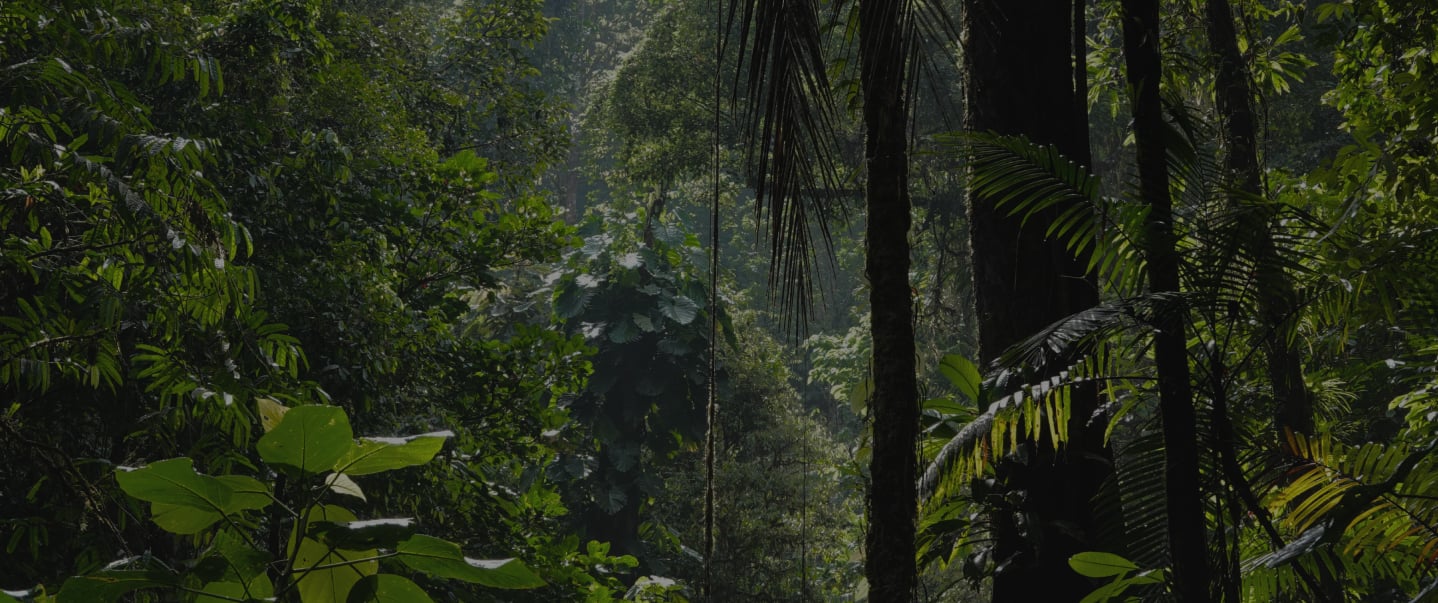
The biological station is located in the southern section of the Barra del Colorado Wildlife Refuge (BCWR) directly to the north of Tortuguero National Park (TNP). The area of operation for the expedition covers both TNP and the BCWR; both of which are included in the Tortuguero Conservation Area (ACTo). The area consists of a collection of waterways running through Caribbean lowland rainforest. The coastal habitats are generally similar in type throughout the area of operation with small variation in boarding habitats, width of the beach and quantity and type of debris found on the beach. The forest habitats vary more considerably with several distinct habitats being present. Altitudinal differences of a couple metres have a large effect on both habitat and species composition in the area. Lower areas, such as those found around the station, tend have large areas of flooded forest whereas the drier areas associated to the National Park tend to only be submerged during times of flooding.

The EBCP was purchased in 1991, by the Canadian Organization for Tropical Education and Rainforest Conservation (COTERC). Prior to GVI’s arrival a number of studies had been undertaken, looking at various species and habitats but no longer term monitoring projects had been possible. GVI Costa Rica’s volunteer resource made long-term studies possible and needs were assessed and partnerships sourced. Currently, GVI Costa Rica is working closely with the Costa Rican Ministry for the Environment, Energy and Telecommunications (MINAET), COTERC and the local community of San Francisco, as well as being a member of Alianza para Baulas del Caribe (ABC) and Red de las Tortugas marinas.

A brief but intensive training period prepares volunteers / interns to begin working on the research programs, after which time you will continue to learn, with each survey becoming increasingly experienced. The expedition is dynamic, with projects undergoing regular review to ensure they meet the needs of partners. Each project is tailored to the needs of our local partner, the needs of the local community and the time of year. Each project works towards some or all of the aims below:

a) Collecting and analysing scientific data, and increasing scientific interest in the area.
b) Increasing the conservation value of the area
c) Improving community awareness and capacity
d) Raising awareness and studying the effects of tourism
e) Encouraging and contributing to local sustainable revenue.

After a comprehensive training period and a compulsory first aid course (certification included for Interns), the group rotate on the various projects. In addition to those listed, GVI Costa Rica is also supplying resources and personnel to assist COTERC in a Large Mammal Monitoring Program inside the BCWR. Below are the projects currently being undertaken:

1. Jaguar Predation of Marine Turtles Study

GVI Costa Rica has been conducting this research by request of MINAET since July 2005. The aim of this project is to determine whether predation of marine turtles by jaguars (Panthera onca) in TNP is having an impact on the marine turtle populations.

Data collection for this project involves documenting evidence of jaguar predation of marine sea turtles. On a weekly basis, a survey team walk 14.5 miles on the beach of TNP. Information is collected, such as, the number and location of predated turtles and the presence / absence of turtle and jaguar tracks per half mile on the beach. Other general information is also recorded, including weather and sand conditions on the beach.

Due to the strenuous nature of project and health and safety consideration, participation is selection-based.

2. Jaguar Camera Trapping Study

To complement the Predation study, GVI Costa Rica began using camera traps at the end of 2006. The aim is identify and estimate the abundance of jaguars along the beach of TNP. Surveys are conducted between one and three times a week by a small research team. Camera traps are set up in the forest that borders the beach, in locations where there is evidence of jaguar presence.

The infrared and heat sensitive cameras are checked by a field team on a regular basis to ensure the cameras are working correctly and to retrieve any photographs that have been taken. These photographs are developed and analysed by the team back at the research station.

3. Marine Turtle Monitoring and Conservation Program

(Nesting season March – October; beach preparations from January; hatchling season June - December)

This program has been managed by GVI Costa Rica since 2007 and is carried out in partnership with COTERC. The aim is to develop a more detailed understanding of and promote the conservation of the nesting marine turtles that utilise our local beach, Playa Norte. Playa Norte (north of the beach at Tortuguero) receives up to four species of endangered and critically endangered marine turtles: green (Chelonia mydas), leatherback (Dermochelys coriacea), hawksbill (Eretmochelys imbricata) and the occasional loggerhead (Caretta caretta).

The beach is monitored by teams to record the spatial and seasonal distribution of nests, the level of illegal poaching, hatchling emergence and hatchling success rates. Information on the re-emergence of turtles to the nesting beach and / or migration between beaches is also collected and recorded. Human impact data are recorded to determine if this has any impact on the nesting patterns of the turtles.

There are a number of different elements within this project, depending on the stage of the season. During the nesting season, the beach is monitored each night in order to record details of the nesting turtles and nests (including the location of the nest and number of eggs) and to ‘tag’ the female nesting turtles. A morning census is conducted each day to determine the status of the recent nests and record any new tracks of nesting turtles. The beach is cleaned at the relevant locations and times to promote increased hatching success.

Hatchling tracks are monitored and recorded and nest excavations are carried out (once the nest has hatched or is past the date it was due to hatch) to determine the success rate of the nest and record any relevant evidence on why eggs have not hatched.

4. Canal Bird Monitoring Program

The partnership with Steven Furino of Waterloo University, Canada has been established since GVI Costa Rica’s arrival in 2005, the current protocols have been in place since January 2007. The aim is to provide evidence to help develop an understanding of how resident and migratory bird species use lowland wet forests and, in particular, the canals that are associated with these forests.

We are responsible for collecting population data on resident and migratory birds on canals in the TNP and the BCWR. In order to do this we monitor and record the bird species found on three different canals at weekly intervals. Thirty target species of birds have been identified and standard research methods are employed, such as standard point counts and area search survey techniques, to ensure the data can be used alongside that collected in other locations by other research teams. Surveys are usually carried out first thing in the morning and involve a team of five or six canoeing through the relevant area, recording any sightings and sounds of the target species.

5. English Language and Environmental Education Classes

Local capacity building: GVI Costa Rica is involved with the local school in San Francisco village, teaching basic English to children and adults within the local community of San Francisco. An exchange also takes place with colleagues from a local tourist lodge (seasonal), providing an opportunity for all to practice their language skills in an informal setting and learn more about the different cultures of Costa Rica.

Environmental education: GVI Costa Rica, in partnership with COTERC, is teaching environmental education to schoolchildren on a weekly basis. These classes cover various topics and aim to build an awareness of the environment in which the children live. We also organise regular community events for the residents of San Francisco. These events cover an environmental theme, for example composting, but are also designed to be fun and to continue to promote a good relationship between local residents and GVI Costa Rica.

6. Incidental Species Study

GVI Costa Rica has been recording incidental sightings of animals at EBCP since January 2007. The aim of the study is to maintain a formal, accurate record of the daily occurrences of birds, mammals, reptiles and amphibians sighted within the property boundaries of the station. By keeping a daily record of the occurrence of species, we can determine which species are seen most frequently and determine if there any changes in the frequency of sightings of certain species over time.

7. Meteorology and Environmental Study

COTERC have been recording weather information at the Biological Station to varying degrees since 1991. Since January 2007, GVI Costa Rica has been assisting COTERC in the collection and compilation of a set data into the climatological and environmental conditions experienced at EBCP each day.

8. Canal Boat Impact Study

GVI Costa Rica has been assisting MINAET by documenting and monitoring the impact of tourism on our local canal since January 2006. On a weekly basis, the canal traffic along Caño Palma is monitored between 06:00 and 18:00. As possible, all days of the week are surveyed throughout the phase. Two personnel conduct surveys, each taking a six-hour shift, between either 06:00 and 12:00 or 12:00 and 18:00.

The number and type of boats are recorded, alongside any other evidence, such as the number of tourists and the type of engine in line with information recorded for visitors to TNP canals.

9. National Scholarship Program

GVI invites up to four nationals a year to join an expedition in order to receive biological training and gain valuable skills and experience along with the international volunteers. Priority will be given to people who intend to live and work long-term in the conservation of the area.

Your time with us will be assessed and after the completion of your first ten weeks with us on expedition you will receive two weeks of Spanish language classes. After which time, qualifying Interns will have the chance of a work placement, either supporting GVI staff and assisting with the running of the expedition in a position of higher responsibility and gaining the further training that will be required, or working with a partner in a field such as wildlife conservation or human dimensions of wildlife and gaining the associated skills.

Duration and Costs

Duration Cost
6 Months £3500
Group Size
6 interns, plus up to 16 other volunteers, plus field staff.
Book Online Now

Share this Page

Delicious
Facebook Share On Facebook
Digg
Reddit

Related Programs

Search World Map

World Map Search for Volunteer options using our interactive World Map

Search for Programs